TL;DR
Still sharing your INFP or ESTJ results on social media? Recently, a new personality assessment called the SBTI (Super Basic Type Indicator) has gone viral. Unlike the traditional 4-letter MBTI, SBTI introduces a 15-dimensional grid and 5 core facets, featuring highly relatable social labels like "ATM-er" and "CTRL." This guide breaks down exactly what SBTI is, how it compares to MBTI, and why it's breaking the internet.
Table of Contents
- What is the SBTI Test?
- How SBTI Works
- SBTI vs MBTI
- Why is SBTI Going Viral?
- FAQ
- Summary
- Related Resources
Key Takeaways
- Dimensional Upgrade: Upgrades from MBTI's 4 dimensions to a highly granular 15-dimensional grid.
- Relatable Labels: Features highly internet-native, slightly self-deprecating labels (e.g., "ATM-er", "CTRL").
- Five Core Facets: Analyzes social masks, career survival, and emotional cores rather than just cognitive processing.
- Visual Results: Generates beautiful, highly shareable 15-dimensional radar chart posters.
🔧 Try it now: Use our free SBTI Online Test to discover your hidden personality and generate your exclusive 15-dimensional grid poster.
What is the SBTI Test?
The SBTI (Super Basic Type Indicator) is an emerging personality and behavioral tendency assessment tool. Distinct from the rigid stereotypes of traditional psychological tests, SBTI is designed specifically for modern internet natives. It evaluates not just your underlying personality, but your dynamic behavioral patterns in the workplace, social settings, and intimate relationships.
If you've ever felt that MBTI's 16 types couldn't fully define you (e.g., feeling like an "Introvert wearing an Extrovert's mask"), SBTI was created to map those exact gray areas.
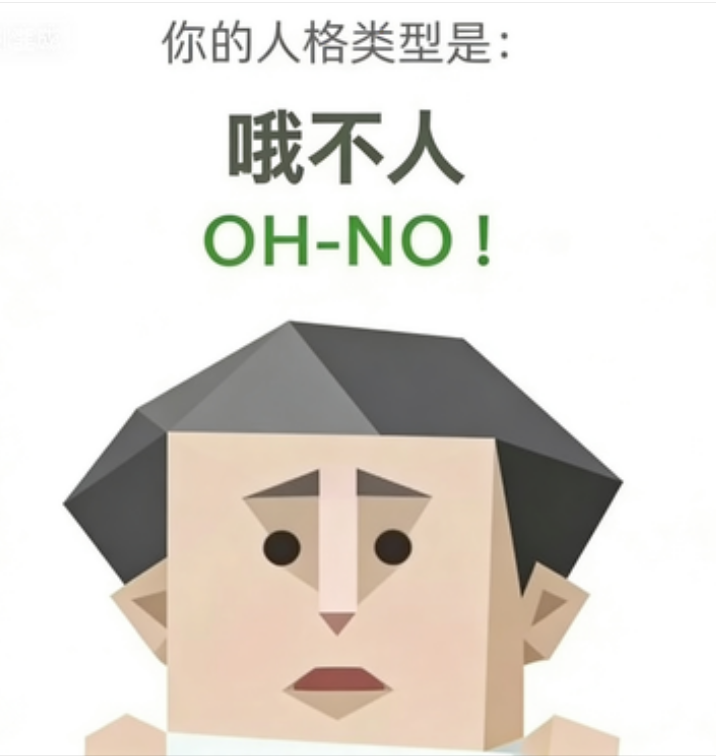 Typical SBTI Personality: OH-NO (The Chaos Agent)
How SBTI Works
The underlying logic of SBTI is built on the intersection of 5 Core Facets and a 15-Dimensional Grid.
The 5 Core Facets
SBTI abandons the traditional "introvert vs. extrovert" binary, evaluating you from 5 facets that align with modern life:
- Social Mask: The image you project to strangers.
- Career Survival: Your instinctual response to workplace pressure.
- Emotional Core: How you process feelings when alone.
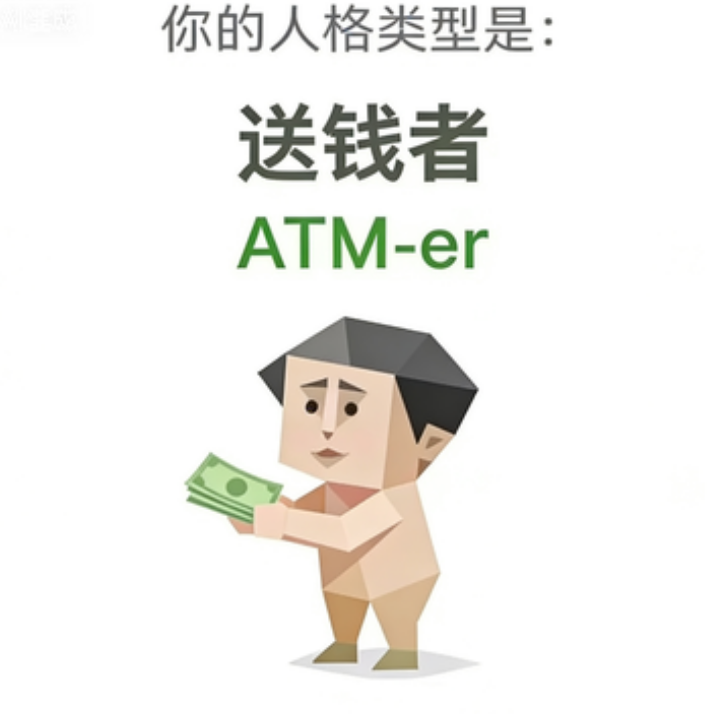
- Money Philosophy: Your tendencies in acquiring and allocating wealth (hence labels like "ATM-er").
- Order Preference: How you plan and control your life.
15-Dimensional Grid
Beneath these 5 facets, SBTI breaks down into 15 specific data dimensions. After completing the test, the system generates a multi-dimensional radar chart (or grid), allowing you to visually assess your personality's "strengths and weaknesses."
(Note: Because Mermaid's native radar chart support is limited, test results are usually rendered as beautiful HTML Canvas posters.)
SBTI vs MBTI
The first question most people ask is: "How is this different from MBTI?" Let's look at a direct comparison:
| Feature | MBTI (Myers-Briggs) | SBTI (Super Basic Type) |
|---|---|---|
| Dimensions | 4 dimensions (E/I, S/N, T/F, J/P) | 15 granular grid dimensions |
| Outcomes | 16 fixed personalities (e.g., INTJ, ESFP) | Dynamic label combinations (e.g., CTRL + ATM-er) |
| Tone | Academic, neutral descriptions | Internet-native, relatable, slightly self-deprecating |
| Focus | Cognitive and decision-making styles | Social, career, and financial survival states |
| Shareability | High (4-letter tags) | Extremely High (Visual, meme-ready posters) |
Why is SBTI Going Viral?
1. Relatable Self-Deprecation
SBTI's biggest draw is that it doesn't beat around the bush. When your test results reveal that your hidden identity is an "ATM-er" (someone who gives away money/value) or an "OH-NO" (chaos agent), this precise self-deprecation perfectly matches modern social media culture.

2. Higher "Granularity"
The "stereotypes" of MBTI can feel restrictive. SBTI's 15-dimensional grid accurately captures contradictory traits—for instance, you might be a highly disciplined "CTRL" at work, but a people-pleasing "ATM-er" in relationships.
3. High-Aesthetic Social Currency
SBTI tests are usually accompanied by high-fidelity visual designs. Take QubitTool's SBTI Test for example: upon completion, it automatically generates a beautiful poster featuring frosted glass effects and a clear 15-dimensional radar chart. Users can simply long-press to save and share it to Instagram or Twitter, drastically lowering the friction for sharing.
FAQ
Q1: Is the SBTI test accurate?
SBTI is designed more for entertainment and social virality. While it incorporates multi-dimensional psychological facets, its core goal is to resonate with users through relatable modern labels, providing a novel way for self-exploration rather than strict medical diagnosis.
Q2: How long does it take to complete the SBTI test?
Because it evaluates 15 dimensions, the test typically consists of 30-50 situational multiple-choice questions and takes about 3-5 minutes to complete.
Q3: Why does my result include an MBTI comparison?
To lower the cognitive barrier, most SBTI platforms (like QubitTool) include an "SBTI × MBTI Comparison Section" at the bottom of the results page. This tells you which MBTI type your SBTI profile most closely resembles, helping you understand your results quickly.
Summary
The SBTI test is more than just an MBTI alternative; it's a "social business card" tailored for the modern internet era. Through its 5 facets and 15-dimensional grid, it uses relatable language to accurately map our survival states in a complex society.
Instead of obsessing over whether you're an Introvert or an Extrovert, why not try a test with much finer granularity?
👉 Start your SBTI Test now — Find out if you're the "ATM-er" or the "CTRL" of your friend group!
Related Resources
- How to Build an SBTI Test Site in Half a Day with Vibe/Spec Coding — Behind-the-scenes engineering
- What is Prompt Engineering? — Communication skills in the AI era
- AI Agent Complete Guide — Explore the future of AI applications